
Wearables and data
What does a football GPS vest measure?
The vest keeps the tracking unit stable between the shoulder blades. The useful information comes from the unit, the recording conditions and the way the session is defined.
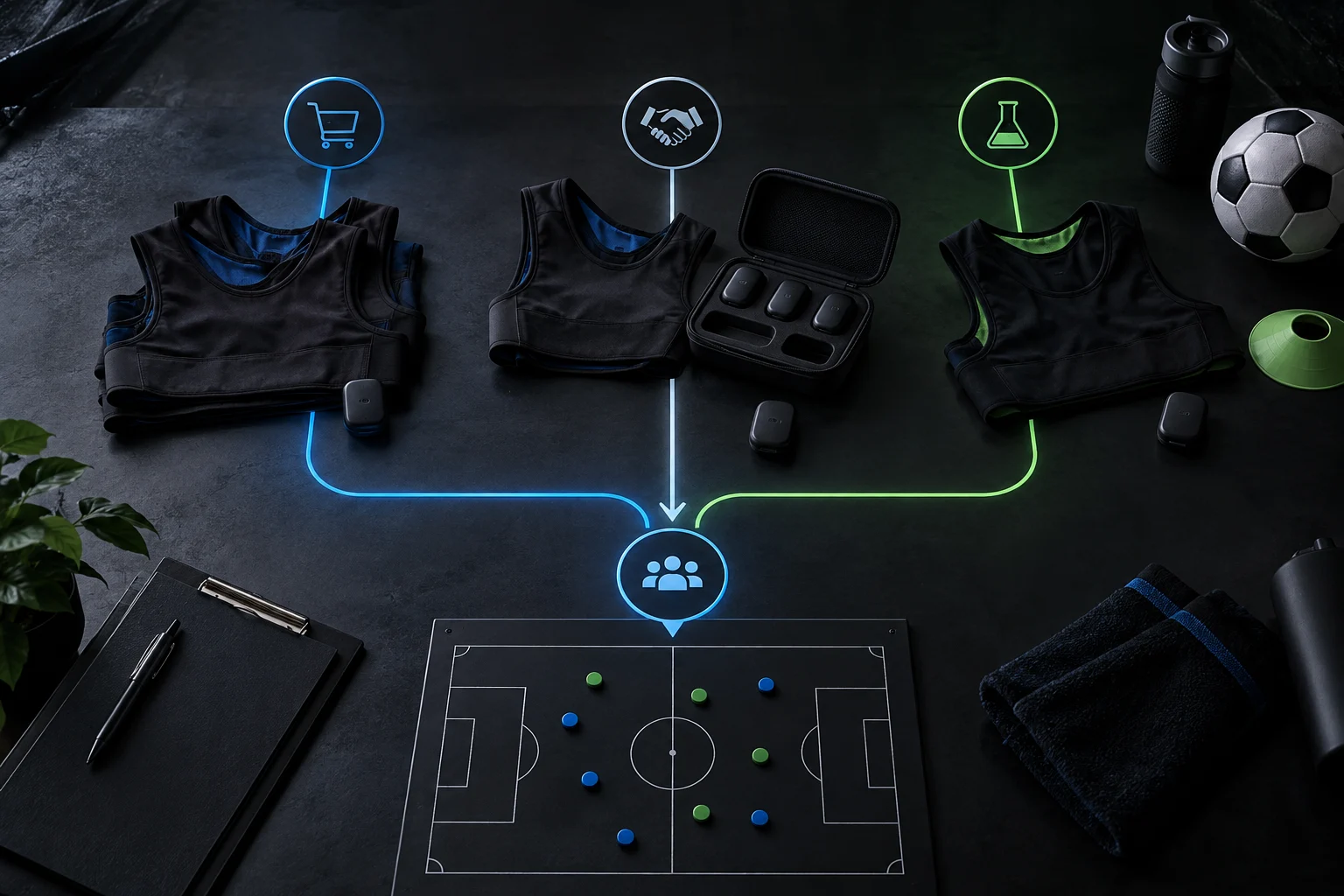
The vest positions the sensor. The unit does the measuring.
A close-fitting vest keeps the tracking unit between the shoulder blades where it can receive satellite signals and move consistently with the player. A poor fit, a loose pocket or the wrong unit assignment can damage the record before analysis begins.
Depending on the configuration, the unit can combine GNSS positioning with accelerometer and gyroscope signals. Heart rate requires a compatible, correctly worn input such as the configured ECG vest setup; it should not be assumed from GNSS alone.
Three groups of information matter.
Movement volume
Total distance and effective duration describe how much work was recorded. Distance per minute adds a time-normalised view, but it still depends on the selected session window.
Speed exposure
Maximum speed, high-speed distance and sprint exposure describe how often a player entered faster running zones. Thresholds must be documented: an absolute team threshold and an individual threshold do not answer exactly the same question.
Mechanical actions
Accelerations, decelerations and IMU load can describe repeated changes of movement that total distance may miss. Sensor placement, filtering and event definitions affect these values, so comparisons should stay within a consistent system and workflow.
Check the record before judging the player.
- Was the correct unit assigned to the player?
- Did the device record the full intended period?
- Were breaks, substitutions and drill windows handled correctly?
- Was signal quality stable enough for the metric?
- Are the speed zones and algorithms consistent with the comparison?
A clean-looking number is not proof of a clean recording. The session context and quality checks belong beside the output.
ATHLOS keeps the data attached to the football session.
ATHLOS connects player and device assignment, the training or match event, selected time windows and the resulting team and individual reports. This allows staff to return from a value to the player, activity and period that produced it.
The purpose is not to replace coaching judgement. It is to make the evidence easier to verify before the next training decision.
See the workflow in a demo